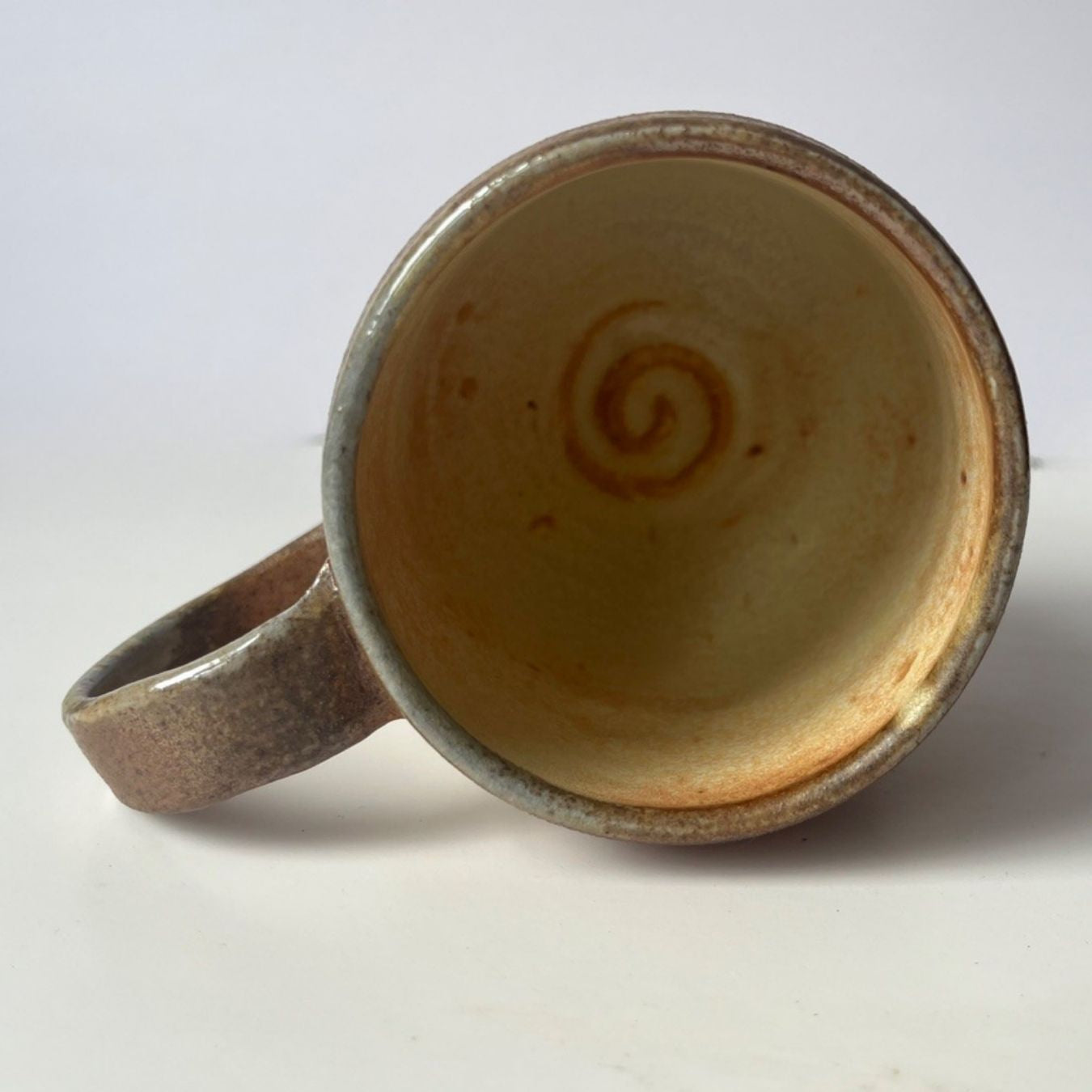
This Spring 2026 wood-fired series was a part of community firing at the Shadbolt Centre for the Arts, with 14 ceramic artists joining together for a 36 hour firing. (You can see video of the firing here)
This wood-fired mug was left unglazed prior to loading in the kiln. In wood firing, ash carried by the flame settles onto the clay surface and bonds with it, creating natural glaze, texture, and colour that reveal the flame’s path. Softwoods burn hotter, while hardwoods contain more minerals and produce more ash.
Wood-fired kilns in China date back 10,000 years, starting with simple pit kilns called Yáo (窯) and later evolving into long hillside dragon kilns, Lóng Yáo (龍窯), including famous sites like Rú Yáo (汝窯) of the Song dynasty. In Korea, the Goryeo dynasty (10th–14th c.) perfected celadon using climbing kilns, while Japan developed single-chamber Anagama (穴窯) and multi-chamber Noborigama (登り窯) kilns. Modern horizontal train kilns, like this one at the Shadbolt Centre for the Arts, emerged in the mid-20th century for today’s studio pottery.